Key things to consider when choosing a new car seat cover
Key things to consider when choosing a new car seat cover

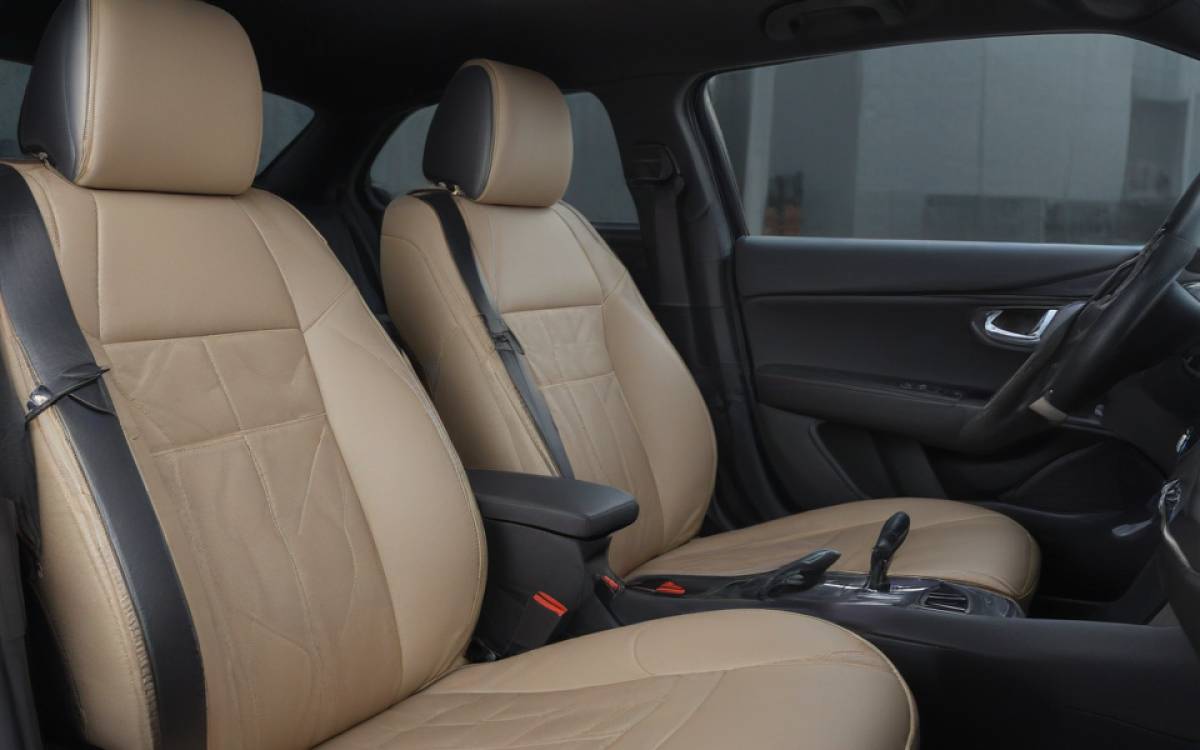
Many car owners treat their vehicles as an extension of their personal identity, carefully choosing customizations to make the cars uniquely theirs. Car seat covers are essential accessories that protect the vehicle’s upholstery while transforming the interior with a premium aesthetic. The right cover protects the car’s components from coffee spills, food, and mud. Carefully selecting quality seat covers by evaluating multiple factors maximizes comfort and resale value while allowing for personal style and protection.

Things to consider when choosing new car seat covers

Comfort

Comfort is the first thing to consider when buying new seat coverings. Pick fabrics that are soft and feel cushioning against the skin. Some fabrics are ideal for longer drives, as long as they do not compromise the car’s back support.

Style

Pick a seat cover style that matches the car’s interior and reflects the owner’s personality. Stylish covers make a vehicle’s interior feel fresh and, in some cases, more luxurious.

Budget

When setting a budget, car owners should prioritize their needs. Think carefully when selecting the fabric. Sometimes, spending more up front can result in long-term savings. However, it is important to check for packages or discounts that can offer better value for the product.

Cleanup

Ease of cleaning is another factor that buyers should consider, as seat covers are bound to get dirty. Pick fabrics or materials that can withstand spills, stains, and daily wear and tear. A machine-washable fabric would be a better choice if available. Fabrics that are easier to put on and remove are easier to deal with, as they eliminate the need to clean the car seat covers regularly.

Steps to change car seat covers

Choose the right covers

The material chosen for the car seat cover can make a significant difference. Car seat covers are available in 3 primary options, which are universal, custom, and semi-custom. Universal fit is lighter on the pocket, but does not give the same look and feel as the other two. If the budget permits, one should opt for a custom fit in a material of their choosing. Common options include leather, leatherette, fabric, and neoprene. 

Clean the seats

Before starting with the installation, make sure to clean the car seats thoroughly. Clean the seat thoroughly by vacuuming, washing, and wiping it down with a dry cloth, then allow it to air dry. One can also steam-clean the seats if they have the time and access to the right tools. Doing this ensures there is no dirt or grime stuck to the seat. It can prevent long-term damage from particles that could have been trapped under the new seat cover. Use a leather cleaner to remove any oil or residue from the original seats.

Start with the front

After cleaning the seats, it’s time to start with the installation. The front-row seats are easier to install and help one become familiar with the process, so it’s best to start with these. Remove the headrest before pulling on the front seat cover. Secure the cover by adjusting it to the seat contours and fastening it with hooks, clips, or straps. Once done, reinstall the headrest. Headrest covers come as separate pieces or are integrated into the seat cover with VELCRO or slot openings for easy installation.

Follow at the back

The back seat covers come next. This is a trickier part of the task. Due to the cover’s size, installers may need extra time to properly fit it around seatbelts and armrests. If possible, detach the front of the back seat to easily install the cover over the back. Once the backrest is properly covered and secured, it’s time to reattach the seat bottom. Slide the seat cover over the bottom part and secure it in place.

Recommended

6 things to consider when choosing all-terrain tires

6 things to consider when choosing all-terrain tires

All-terrain tyres are designed to handle different driving conditions. From paved highways to gravel roads, dirt tracks, and mild off-road terrain, these tyres can cover many bases. They are often chosen by drivers who need versatility rather than a tyre optimized for a single surface. Selecting the right all-terrain tyre involves understanding driving habits, vehicle requirements, and the environments the tyre is expected to perform in. A well-chosen tyre supports safety, durability, and consistent performance across changing road conditions. Driving conditions and usage When selecting all-terrain tires, a driver should first assess how and where the vehicle is used. All-terrain tires vary in how aggressively they are designed, and not all options perform equally across surfaces. Some vehicles are mostly driven on highways with little to no time on unpaved roads, while others regularly ride on rocky, sandy, or muddy paths with uneven terrain. An honest review of one’s driving habits helps avoid choosing tires that are too noisy for daily highway commuting or too weak for rugged off-road weekend adventures. Tread pattern and design The tire’s tread pattern plays a crucial role in how it performs. Tires with wide, deep treads handle dirt and gravel roads very well. Some are also designed to shake off dirt and gravel to maintain grip on rough and uneven ground.
Car financing options – Banks, dealerships, and credit unions

Car financing options – Banks, dealerships, and credit unions

When buying a car, the best thing is to pay the full amount upfront. This way, one becomes the owner immediately and avoids the risk of the car being repossessed. One also does not have to worry about monthly installments or interest charges. However, making a total upfront payment might not be possible if the vehicle is expensive and one has limited savings. In this case, looking into car financing options might be necessary. What is car financing? Financing a car means buying it by borrowing money. One can borrow enough money to cover the entire purchase or make a partial payment (down payment) on their own and use the borrowed amount for the rest. The outstanding sum, along with interest, must be paid back to the lender in monthly installments. Most auto loans are secured, meaning the car being bought serves as collateral for the loan. So, if one misses more than a set number of payments, the lender has the right to repossess the car and sell it to recover their money. They can also repossess and sell the car if one violates any loan agreement. Auto financing options Banks One can apply for an auto loan from a bank by visiting its website or a nearby branch.
6 key tips for selling a used RV

6 key tips for selling a used RV

Demand for RVs is at an all-time high due to remote work, tax refunds, and flexible travel. So, the process of selling a used RV can be simplified with significant time, research, and effort. One can choose to sell it through a dealer or by oneself. Additionally, the RV needs to be prepared for sale, which involves addressing repairs, creating listings, taking photos, and more. To simplify this process, having a checklist can be helpful.  Clean thoroughly Before listing a used RV for sale, ensure the vehicle is thoroughly cleaned for the next owner. Make sure to deep clean the RV, both inside and out. Use a pressure washer on all accessible surfaces, as this will ensure the exterior has a shiny, squeaky-clean look when complete. Do not overlook the carpet and any bedding; shampoo and vacuum them to remove all the trapped dirt and microbes. Make every effort to show buyers that the RV has been well-maintained. This process will help one get a decent value for the vehicle. Depersonalize When selling an RV, depersonalizing it is important. Remove all personal decor, furniture, bumper stickers, and anything else that reflects the previous owner’s personal touch and space. Essentially, the aim is to eliminate any visual reminders that the RV was previously used as a home, as potential owners need not be reminded of its past users.
Top 6 coupe cars in 2026

Top 6 coupe cars in 2026

For drivers seeking a combination of everyday comfort and sporty features, coupes are an excellent option to consider. The latest lineup features a wide range of cars, including affordable rear-wheel-drive sports models, sporty options, and upscale luxury vehicles. With so many options available, it can be confusing to make the right choice. So, learning about the top models, their key features, and prices can help one make an informed buying decision. Toyota GR86  This compact car features a 6.3-inch ground clearance, four seats, and 6.3 cubic feet of trunk space, making it suitable for those looking for a coupe for daily commuting. Under the hood, it is equipped with a 2.4L turbo flat-four engine that is capable of producing 228 horsepower and 184 lb-ft of torque. Buyers can choose between a 6-speed manual and an automatic transmission, both paired with rear-wheel drive. The car delivers a combined fuel efficiency of 22–24 mpg and comes with a Torsen limited-slip differential and a sport-tuned suspension. Inside, the cabin is fitted with an 8-inch touchscreen compatible with Apple CarPlay and Android Auto. The starting price is around $30,000. Subaru BRZ Like the Toyota GR86, this affordable coupe also features a 2.4L boxer engine that delivers 228 horsepower and 184 lb-ft of torque.